Ihr Marktplatz für antiquarische und neue Bücher | Login | Neu registrieren Registrieren
Buchfreund als App

methods programm [Titel]

(774 Ergebnisse)
Titel
methods programm
Titel: methods programm
Magnesium: 8th International Conference on Magnesium Alloys and their Applications [Hardcover] (English) K. U. Kainer Naturwissenschaften Chemie Festkörpermechanik Legierung Magnesium Magnesiumlegierung On more than 1400 pages, researchers and developers from Europe, Asia and the US share their previously unpublished knowledge on magnesium alloy development, modeling, processing and applications. Strongly application-oriented, this monograph collects the latest research results from Europe`s leading magnesium conference, with contributions ranging from novel alloys to the experimental and theoretical characterization of their properties, from classic to advanced casting methods, and from post-processing of magnesium alloy components to their use on the industrial scale. In a time where sustainability and energy efficiency are the priorities when designing new products, the need for more flexible raw materials becomes even more evident. Magnesium alloys offer extremely favorable mechanical properties and high recyclability, making it one of the most promising light-weight materials for wide-spread use in the transportations and consumer industries. By selective alloy modification or combining it with other materials, its properties can be tailored to fit the desired characteristics such as increased strength, improved creep resistance, acceptable corrosion behaviour, increased wear resistance and durability. In addition, novel processing methods like semi-solid casting have drastically increased the application range of magnesium alloy components. This book brings together the most recent findings in the science and technology of magnesium and its alloys. The contributions range from the development of novel alloys to the experimental and theoretical characterization of their properties, from classic to advanced casting methods such as rheocasting and thixoforming, and from post-processing of magnesium alloy components to their use on the industrial scale. Author: Karl Ulrich Kainer is Director of the Institute of Materials Research at the GKSS Forschungszentrum Geesthacht and Professor at the Technical University Hamburg-Harburg. His research focuses on metal matrix composites and magnesium alloys, with a special emphasis on applications in the automobile industry. He cooperates in research projects with major European and American car manufactures as well as with research institutes in Asia, America and Europe. He was also Chairman of the three International Magnesium Conferences in Germany, organised by the DGM, and gave invited lectures at many international conferences, including the TMS Annual Meetings in the US. Content: Plenary Lectures Alloy Development Simulation, Modelling Microstructural Evolution Casting and Recycling Wrought Alloys Magnesium Matrix Composites Mechanical Properties Corrosion and Surface Treatment Post Processing Application Magnesium Based Biomaterials Research ProgrammesBeispielbild für diese ISBN

Magnesium: 8th International Conference on Magnesium Alloys and their Applications [Hardcover] (Eng…

von K.U. Kainer Verlag: Wiley-VCH

2009 2009 Hardcover 1454 S. Zustand: gebraucht - sehr gut, On more than 1400 pages, researchers and developers from Europe, Asia and the US share their previously unpublished knowledge on magnesium alloy development, modeling, processing and applications. Strongly application-oriented, this monog…

Bestell-Nr.: BN39137
ISBN: 3527327320
Anbieter: BUCHSERVICE / ANTIQUARIAT Lars-Lutzer *** LITERA…, Wahlstedt, Deutschland

Verkäufer akzeptiert PayPal

299,90 EUR

zzgl. 6,99 EUR Verpackung & Versand
Die persönliche Stimme entwickeln: Ein ganzheitliches Übungsprogramm zur Befreiung der Stimme mit Audio-CD von Kristin Linklater (Autor) Einführung in die Arbeit Wie die Stimme arbeitet Warum die Stimme nicht funktioniert IDer Befreiungsprozeß Die Wirbelsäule - die Stütze des Atems Atmung - die Quelle des Lautes Die Berührung des Tons Schwingungen, die den ursprünglichen Ton verstärken ZwischenschrittTrainingseinheit für Entspannung, die Wirbelsäule, den Kopf, Atmung, Berührung des Tons, Summen Der Stimmkanal IIDer Entwicklungsprozeßdie Resonanzleiter Die Resonanzräume des Stimmkanals Freilassen der Stimme aus dem Körper Die Mitte der Stimme Die Nasen-Resonanzräume Stimmumfang Die Schädel-Resonatoren IIIEmpfindsamkeit und Kraft Die Kraft der Atmung Das Zentrum Artikulation ZwischenschrittÜbungseinheit IVDie Verbindung zu Text und Schauspielen Worte Texte Beobachtungen und Meinungen zu Stimme und schauspielen. Die Stimme ist ein wichtiger Bestandteil der Persönlichkeit. Verspannungen und ein mangelndes Gefühl für den Körper können die Ursache für eine zu hohe, zu leise, zu schwache, zu tiefe oder gepreßte Stimme sein. Hier setzt das Linklater-Programm an. Körperliche Achtsamkeit und Entspannung sind die ersten Schritte. Über Ton-, Stimm- und Sprechübungen wird dann die individuelle natürliche Stimme aus dem Körper, aus der Person heraus entwickelt. Dieses weltweit erfolgreiche Übungsprogramm wurde von der Sprecherzieherin Thea M. Mertz, die selbst mit der Linklater-Methode arbeitet, ins Deutsche übersetzt. Dem Buch ist eine neu entwickelte Audio-CD beigelegt. Über ca. 45 Minuten werden beispielhaft Übungen zum Nach- und Mitsprechen vorgeführt, aufgesprochen von Kristin Linklater (Stimmbeispiele) und Thea M. Mertz (Text). Über den Autor:Kristin Linklater, Schauspielerin, Lehrerin für Stimmbildung, Professor of Voice and Text an der Columbia University School of the Arts Graduate Theatre Program, New York City, künstlerische Leiterin der Shakespeare-Truppe Company of Women, Ausbilderin für Stimmlehrer in den USA, Kanada, England, Belgien, Australien und Rußland.

Die persönliche Stimme entwickeln: Ein ganzheitliches Übungsprogramm zur Befreiung der Stimme mit A…

von Kristin Linklater Verlag: Reinhardt, Ernst

1999 1999 Softcover 240 S. 21,4 x 15 x 2 cm Zustand: gebraucht - sehr gut, Einführung in die Arbeit Wie die Stimme arbeitet Warum die Stimme nicht funktioniert IDer Befreiungsprozeß Die Wirbelsäule - die Stütze des Atems Atmung - die Quelle des Lautes Die Berührung des Tons Schwingungen, die den…

Gebraucht, sehr gut
Bestell-Nr.: BN13362
ISBN: 3497015474
Anbieter: BUCHSERVICE / ANTIQUARIAT Lars-Lutzer *** LITERA…, Wahlstedt, Deutschland

Verkäufer akzeptiert PayPal

45,99 EUR

zzgl. 6,99 EUR Verpackung & Versand
Rock grouting with emphasis on dam sites. Friedrich-Karl Ewert Methodology of Preparation. - 3 Analysis of Completed Grouting Programmes. - 3. 1 Preliminary Remarks. - 3. 1. 1 Selection of the Programmes; Data. - 3. 1. 2 Representation of Grouting Data. - 3. 2 Description and Evaluation of the Programmes. - 3. 2. 1 Grouting Programmes in Folded Siltstone-Sandstone Alternations of the Westphalian Upper Carboniferous. - 3. 2. 1. 1 The Grouting Programme at the Möhne Dam. - 3. 2. 1. 2 The Aabach Dam Grouting Programme. - 3. 2. 2 Grouting Programmes in Buntsandstein. - 3. 2. 2. 1 The Grouting Programme at the Haune Dam. - 3. 2. 2. 2 The Antrift Dam Grouting Programme. - 3. 2. 2. 3 The Twiste Dam Grouting Programme. - 3. 2. 2. 4 Conclusions and Recommendations for Grouting Programmes in Buntsandstein and in Similar Rock Types. - 3. 2. 3 Grouting Programmes in Turonian Limestone of Southeastern Westphalia. - 3. 2. 3. 1 Location, Geology, Hydraulic Routing. - 3. 2. 3. 2 The Grouting Programme in Downtown Paderborn. - 3. 2. 3. 3 The Grouting Programme for the Haxter Valley Bridge. - 3. 2. 4 The Tavera Dam Grouting Programme in Oligocene Conglomerate. - 3. 3 Microscopical Studies. - 3. 3. 1 Purpose and Origin of Samples. - 3. 3. 2 Size of the Injectable Voids. - 3. 3. 3 The Process of Sedimentation, Separation and Drainage of the Excess Water. - 3. 3. 4 The Influence of the Grouting Pressure (Rock Fracturing). - 3. 4 Generally Valid Conclusions from the Analysis of the Grouting Programmes. - 4 Discussion of the Conventional Investigation Methods for Determining Rock Permeability. - 4. 1 Introduction. - 4. 2 On the Execution, Evaluation and Interpretation of Water Pressure Tests. - 4. 2. 1 The Layout of the Tests. - 4. 2. 2 Testing Scheme. - 4. 2. 3 Several Aspects of the Practical Execution and Evaluation of Water Pressure Tests. - 4. 2. 3. 1 The Pump. - 4. 2. 3. 2 The Packer. - 4. 2. 3. 3 Recording of Test Data. - 4. 2. 3. 4 Evaluation of the Measured Data. - 4. 3 Assessment of Current Investigation Methods for Rock Permeability. - 4. 3. 1 Water Pressure Tests and kf-Coefficient. - 4. 3. 2 On the Applicability of the Lugeon Criterion; Appropriate Impermeabilization Criteria. - 4. 3. 3 WPT Rates and the Appraisal of the Specific Rock Permeability. - 4. 4 Conclusions. - 5 On Hydraulic Routing in Rock. - 5. 1 Introduction. - 5. 2 Methods of Researching the Hydraulic Routing in Rock. - 5. 3 Influential Factors in the Development of Water Paths in Rock. - 5. 4 Discontinuities as Prescribed Water Paths and Their Behaviour During Grouting. - 5. 4. 1 Preliminary Remarks. - 5. 4. 2 Bedding Planes. - 5. 4. 3 Joint Planes. - 5. 4. 4 Cleavage Planes. - 5. 4. 5 Faults. - 5. 4. 6 Dissolution Cavities. - 5. 5 The Results of Field Investigations of the Hydraulic Routing. - 5. 5. 1 Hattelberg Tunnel. - 5. 5. 2 Oker-Grane Tunnel. - 5. 5. 3 Outcrops at the Aabach Dam Project. - 5 . 5 . 3 . 1 Preliminary Remarks. - 5. 5. 3. 2 Excavations at the Main Dam. - 5. 5. 3. 3 Karbach Tunnel. - 5. 5. 3. 4 Summary. - 5. 5. 4 Hydraulic Routing in the Buntsandstein. - 5. 5. 5 Hydraulic Routing of the Upper Turonian Limestone of Southeast Westphalia. - 5. 5. 6 Exploratory Addits for a Pump Storage Scheme in Taiwan. - 5. 5. 7 Outcrops at the Tavera Project. - 5. 5. 8 Other Indications Concerning Hydraulic Routing. - 5. 6 Synopsis of the Percolation Behaviour in Rock. - 5. 7 Remarks on Percolation Models and Calculation Methods in Rock Mechanics. - 6 Studies of the Relationship Between the Type of Hydraulic Routing, the Course of the Water Pressure Tests and Grouting Behaviour. - 6. 1 Introduction. - 6. 2 Tests Using Geologically Defined Models for the Hydraulic Routes Around the Boreholes. - 6. 2. 1 Prerequisites. - 6. 2. 2 Description of the Models, Arrangements of the Tests. - 6. 2. 3 Results of Simulated Water Pressure Tests. - 6. 2. 4 Results of Simulated Grouting Tests. - 6. 3 Interpretation of Simulated Water Pressure Tests and Conclusions. - 6. 3. 1 Conclusions Concerning the Type of Hydraulic Routing: Direct or Indirect Communication. - 6. 3. 2 Conclusions Concerning the Size of the Routes in Relation to the Lugeon Criterion. - 6. 3. 3 Conclusions Concerning the Type of Water Paths Drawn from the Absorption Rates. - 6. 3. 4 Possibilities for Misinterpreting Water Pressure Tests. - 6. 4 Interpretation of Simulated Grouting Tests and Conclusions. - 6. 4. 1 Required Pressures for Grouting Very Fine Routes, Rock-Type-Specific Groutability. - 6. 4. 2 The Parallel Grouting of Dissimilar Water Paths. - 6. 4. 3 Interplay Between Extension and Velocity of Grout Travel, Causes for Buildup of Pressure, Groutability and Grout Takes Dependent upon the Type of the Conductivity, Remaining Permeability. - 7 Practical Field Investigations on Permeability by Means of Water Pressure Tests. - 7. 1 Introduction. - 7. 2 Rock Fracturing Contingent upon Injection Pressure. - 7. 3 Appropriate Maximum Pressures for Water Pressure Tests. - 7. 4 The Factor “Time” in Conducting the Water Pressure Tests. - 7. 5 Characteristic Water Pressure Tests for Determining the Permeability Behaviour of Different Rock Types. - 7. 5. 1 Classification of the Water Pressure Tests, “Basic Types”. - 7. 5. 2 Geological Conditions for the Basic Types of Water Pressure Tests. - 7. 5. 3 Discussion of Actual Test Diagrams. - 7. 5. 3. 1 Water Pre. ssure Tests in Impermeable Rock (Group 1). - 7. 5. 3. 2 Water Pressure Tests in Rock of Unchangeable Permeability (Group 2). - 7. 5. 3. 3 Water Pressure Tests in Rock of Changeable Permeability (Group 3). - 7. 5. 3. 4 Water Pressure Tests in Rock of Very Changeable Permeability (Group 4). - 7. 5. 3. 5 Time-Dependent Fracturing Processes (P-Q-t-Diagrams). - 7. 5. 3. 6 Conclusions: Catalogue of the Possible Rock Permeabilities Based on the Water Pressure Tests. - 7. 6 Comparison of Rock Permeabilities Under the Conditions of Injection and Operation. - 7. 7 Water Pressure Tests in Grouted Rocks for Controlling its Success. - 7. 8 On the Definition of “Reference” Pressure. - 8 Practical Criteria for Determining Grouting Methods Considering Rock-Type-Specific Groutability. - 8. 1 Introduction. - 8. 2 Selection of Grouting Pressures in View of the Fracturing Behaviour. - 8. 3 Assessing the Rock-Type-Specific Groutability. - 8. 3. 1 Orientation and Types of Separation Planes Related to the Specific Conditions for Grouting. - 8. 3. 2 Relationships Between WPT Rates and Grout Takes. - 8. 3. 3 The “Specific Absorption Rate” as an Indicator for Groutability. - 8. 3. 4 Mapping Separation Planes from Drill Cores and Their Representation. - 8. 3. 5 Conclusions Concerning Groutable Permeability and Grouting Pressure. - 8. 4 Penetration or Displacement Grouting?. - 8. 5 Comments on Setting W/C Ratios. - 8. 6 Spacing of Grout Holes, Grouting in Series. - 8. 7 Downstage or Upstage Grouting, Schematic or Adapted Execution, Accompanying Water Pressure Tests. - 8. 8 Relationship Between the Type of Hydraulic Routing and the Remaining Permeability. - 8. 9 Test Grouting. - 9 Practical Criteria for Determining the Tolerable Permeability. - 9. 1 Introduction, Hydraulic Fundamentals, Depth of the Curtain, “Tolerable Permeability”. - 9. 2 Estimating the Mean Permeability of the Rock for Determining Seepage Losses. - 9. 2. 1 Problem and Possible Solutions. - 9. 2. 2 Determining kf by a “Modified Well Method”. - 9. 2. 3 Determining kf on the Basis of a Coefficient of Infiltration. - 9. 2. 4 Estimating kf on the Basis of the Inclination of the Groundwater Table. - 9. 3 Erodibility. - 9. 4 Examples of the Possible Differences Between Groutable and Tolerable Permeabilities. - 9. 5 Changes in Permeability and Groutability Due to Comparatively High Storage Levels. - 9. 6 The Expenditures for Grouting Programmes Compared with the Degree of Impermeabilization. - 9. 7 Summarizing Assessment of the Tolerable Permeability. - 9. 8 The Expediency of a Control Gallery Considering Geological Setting and Rock-Type-Specific Groutability. - 9. 9 Lateral Extension of the Grout Curtain, Systematic Groundwater Measurements Prior to the Construction of the Dam. - 9. 10 Influence of the Type of the Project on the Tolerable Permeability. - 10 The Influence of the Local Geological Setting and the Grouting Measures on the Reduction of Uplift. - 10. 1 Introduction. - 10. 2 Example: Aabach Dam. - 10. 3 Example: Antrift Dam. - 10. 4 Example: Tavera Dam. - 10. 5 Example: Twiste Dam. - 10. 6 Conclusions Concerning the Reduction of the Uplift. - 11 Final Remarks: an Attempt at Guide-Lines. - 11. 1 Hydrogeological Scope. - 11. 2 Site Investigations by Geological Mapping, Core Drilling, Testing of Both Permeability and Groutability. - 11. 3 Control Measures During Impoundment. Rock grouting with emphasis on dam sites. Fifteen years have passed since I was working at a dam site super­ vising grouting work. That was not the first time that I had to car­ ry out engineering geological investigations for several similar projects, which always included testing programmes to find out the permeability of the rock, and often I was in charge of grouting work. It thus attracted my attention when this particular grouting programme did not run as intended: most of the grout holes took only very little grout! It could not be the aim of the invested work simply to drill holes and fill them again without bringing about any further improvement. Fortunately, I had the chance to be en­ gaged in many other grouting programmes in the following years and used all these examples to analyse as thoroughly as possible the permeability of the rocks being treated in view of their grout­ ability. The more I studied, the stronger my conviction grew that our rules which had decided the grouting of rock for many de­ cades should be developed further, and therefore I occupied my­ self with contributing some ideas for a new basis to investigation and judgment of permeability of rock and for a more adequate application of this technology. Detailangaben zum Buch - Rock Grouting: with Emphasis on Dam Sites

Rock grouting with emphasis on dam sites. Friedrich-Karl Ewert Methodology of Preparation. - 3 Anal…

von Friedrich-Karl Ewert Verlag: Springer

1985 1985 Softcover Zustand: gebraucht - sehr gut, Fifteen years have passed since I was working at a dam site super­ vising grouting work. That was not the first time that I had to car­ ry out engineering geological investigations for several similar projects, which always included testing progr…

Gebraucht, sehr gut
Bestell-Nr.: BN89411
ISBN: 3540152520
Anbieter: BUCHSERVICE / ANTIQUARIAT Lars-Lutzer *** LITERA…, Wahlstedt, Deutschland

Verkäufer akzeptiert PayPal

499,90 EUR

zzgl. 6,99 EUR Verpackung & Versand
Cobol 2002 de Luxe Software-Entwickler Enterprise JavaBeans Groovy COBOL 2002 de Luxe Cobol 2002 deLuxe COBOL Norm 2002 Objektorientierte Progrrammierung Integration von Java EJBs Web Services XML Cobol-Standard Cobol-Sprache Sprachelemente von Cobol Programme Microfocus NetExpress OOP Programmierung Funktionen Klassen Methoden Interfaces Datendefinitionen Cobol-Anweisungen Datenein Datenausgabe Dateninitialisierung Datenübertragung arithmetische Operationen Steueranweisungen Dateiverarbeitung Unter dem Titel COBOL 2002 de Luxe ist bei mitp das erste deutsche Fachbuch erschienen, das sich mit Details der neuen COBOL Norm 2002 auseinandersetzt. Neben der Betrachtung der Klauseln und Anweisungen gehen die Autoren Raouf Habib und Uwe Rozanski auf Themenkreise wie Objektorientierte Progrrammierung sowie Integration von Java, EJBs, Web Services und XML ein. Autorenporträt: Uwe Rozanski ist Software-Entwickler und hat bereits Bücher zu Enterprise JavaBeans und Groovy geschrieben. Cobol 2002 de Luxe. von Raouf Habib Uwe Rozanski Software-Entwickle Enterprise JavaBeans Groovy COBOL 2002 de Luxe COBOL Norm 2002 Objektorientierte Progrrammierung Integration von Java EJBs Web Services XML Cobol-Standard Cobol-Sprache Sprachelemente von Cobol Programme Microfocus NetExpress OOP Programmierung Funktionen Klassen Methoden Interfaces Datendefinitionen Cobol-Anweisungen Datenein Datenausgabe Dateninitialisierung Datenübertragung arithmetische Operationen Steueranweisungen Dateiverarbeitung Cobol 2002 de Luxe Raouf Habib Uwe Rozanski

Cobol 2002 de Luxe Software-Entwickler Enterprise JavaBeans Groovy COBOL 2002 de Luxe Cobol 2002 de…

von Raouf Habib Uwe Rozanski Software-Entwickle Enterprise JavaBeans Groovy Verlag: mitp

Auflage: 1 (2003) Auflage: 1 (2003) Softcover 953 S. 14,4 x 10,8 x 2,8 cm Zustand: gebraucht - sehr gut, Viele Studenten sind überrascht dass Cobol noch so einen starken Verbreitungsgrad hat. Aber wenn große Projekte mit über hundert Mannjahren Entwicklung zu stemmen sind, ist Cobol auch nach 50…

Bestell-Nr.: BN6711
ISBN: 382660945X
Anbieter: BUCHSERVICE / ANTIQUARIAT Lars-Lutzer *** LITERA…, Wahlstedt, Deutschland

Verkäufer akzeptiert PayPal

119,90 EUR

zzgl. 6,99 EUR Verpackung & Versand
Kompendium Q-M-A: Qualitätsmanagement in der ambulanten Versorgung Eberhard Gramsch, Jörg-Dietrich Hoppe und Günther Jonitz Kompendium Q-M-A Medizin Pharmazie ambulante Versorgung Qualitätsmanagemen Disease-Management-Programme DMP QM Arztpraxis Ärztekammer Integrierte Versorgung Medizinische Versorgungszentren MVZ Einführung in praktikable und bewährte Qualitätsmanagement-Konzepte für die ambulante VersorgungIm Gesundheitswesen gewinnt Qualitätsmanagement als Zusammenfassung aller Maßnahmen, die der Verbesserung einer angebotenen Dienstleistung dienen, immer mehr an Bedeutung. Vor diesem Hintergrund hat das ÄZQ 2001 ein Internet-, Informations- und Fortbildungsprogramm zum Qualitätsmanagement in der ambulanten Versorgung (Q-M-A) entwickelt. Das Werk stellt dieses Fortbildungsprogramm in exemplarischen Auszügen vor und führt in die Grundlagen des Qualitätsmanagements ein. Zahlreiche Experten aus Patientenversorgung, Selbstverwaltung und Wissenschaft erläutern anschaulich theoretisches Grundwissen sowie einzelne Verfahren, z. B. QM-Darlegungs- und Zertifizierungs-Systeme. Das Werk ist ein idealer Begleiter zu den Intensivseminaren Qualitätsmanagement in der Arztpraxis , die von verschiedenen Ärztekammern durchgeführt werden. Definition und Konzepte des Qualitätsmanagements - Die wichtigsten QM-Methoden im Überblick - Eckpunkte des Qualitätsmanagements in der Arztpraxis . ktuelle Modellprojekte - Neu in der 3. Auflage: Integrierte Versorgung, Medizinische Versorgungszentren (MVZ) - Kriterien bei Disease-Management-Programmen (DMP) - Zertifizierung in der ambulanten Versorgung - Stiftung Praxissiegel - Nationale Versorgungsleitlinien (NVL) - Qualitätsmanagement des G-BA - Telematik Sprache deutsch Maße 165 x 238 mm Einbandart Paperback Medizin Pharmazie ambulante Versorgung Qualitätsmanagement ISBN-10 3-7691-3321-8 3769133218 ISBN-13 978-3-7691-3321-9 9783769133219 Kompendium Q-M-A: Qualitätsmanagement in der ambulanten Versorgung von Eberhard Gramsch, Jörg-Dietrich Hoppe und Günther Jonitz Kompendium Q-M-A

Kompendium Q-M-A: Qualitätsmanagement in der ambulanten Versorgung Eberhard Gramsch, Jörg-Dietrich…

von Jörg-Dietrich Hoppe Eberhard Gramsch Verlag: Deutscher Arzte-Verlag

Auflage: 3. Auflage: 3. Softcover 182 S. 23,6 x 16,4 x 1 cm Zustand: gebraucht - sehr gut, Einführung in praktikable und bewährte Qualitätsmanagement-Konzepte für die ambulante Versorgung Im Gesundheitswesen gewinnt Qualitätsmanagement als Zusammenfassung aller Maßnahmen, die der Verbesserung ein…

Gebraucht, sehr gut
Bestell-Nr.: BN10459
ISBN: 3769133218
Anbieter: BUCHSERVICE / ANTIQUARIAT Lars-Lutzer *** LITERA…, Wahlstedt, Deutschland

Verkäufer akzeptiert PayPal

189,00 EUR

zzgl. 6,99 EUR Verpackung & Versand
Klassische Elektrodynamik  - Der Klassiker unter den Lehrbüchern zur Elektrodynamik liegt nach fast 20 Jahren wieder in einer deutschen, durchgängig aktualisierten Auflage vor. Der Jackson behandelt in bekannt verständlicher und umfassender Weise alle Grundlagen und fortgeschrittenen Aspekte der klassischen und semiklassischen Elektrodynamik und wurde darüber hinaus um die Neuheiten der letzten 20 Jahre ergänzt. Außerdem werden numerische Methoden der Elektrostatik und Magnetostatik besprochen, so dass der Leser die theoretische Basis einschlägiger Computer-Programme verstehen lernt.    Durch zahlreiche Beispiele und Übungen sowie umfangreiche Literaturhinweise und das ausführliche Register ist der Jackson nicht nur ein umfassendes Lehrbuch, sondern auch ein unentbehrliches Nachschlagewerk.

Klassische Elektrodynamik - Der Klassiker unter den Lehrbüchern zur Elektrodynamik liegt nach fast…

von John David Jackson Verlag: Berlin ; New York : de Gruyter,

3., überarb. Aufl. 2002. Hardcover XIX, 938 S. : graph. Darst. ; 25 cm Leichte Lese- und Lagerspuren! Sie erhalten eine Rechnung mit der darin ausgewiesenen MwSt.

Gebraucht, gut
Bestell-Nr.: 18022
ISBN: 3110165023
Anbieter: bookmarathon, Emmendingen, Deutschland

Verkäufer akzeptiert PayPal

56,00 EUR

zzgl. 4,95 EUR Verpackung & Versand
GUNTA STÖLZL : Meisterin am Bauhaus Dessau ; Textilien, Textilentwürfe und freie Arbeiten 1915 - 1983 . ( Ausstellung Stiftung Bauhaus Dessau, Städtische Kunstsammlungen Chemnitz, Museum für Kunst und Gewerbe Hamburg, 1997 / 1998 ). . .   - ( Textilkunst Künstlerin 30er Jahre Bauhäuslerin Biografie Biographie Bildende Kunst Textildesign Bildband Monographie Monografie Werkverzeichnis Werkschau Weimar Dessau Leiterin textilwerkstatt Entwurf Entwürfe Garn garne Design handwerk Brauchtum Kunsthandwerk Mode Modedesign Kunsthandwerkerin Farbe Material Technik Handwerkskunst Adelgunde Gunda Stölzel München Männedorf Schweiz Weberin Textildesignerin Handwebkunst Handweben Sammlung Sammlungen Kunstkatalog Kunstausstellung moderne EInzelausstellung Königliche Kunstgerwerbeschule Marcel Breuer Werkstatt am bauhaus Afrikanischer Stuhl Haus Sommerfeld Stoffdesign Färbung methoden Produktion Georg Muche Ontos Werkstätten Werkstätte Werkmeisterin Meisterin Vertrieb Arieh Sharon Emigration Gertrud Preiswerk SPH-Stoffe Webereiwerkstatt Seefeld Küsnacht Wohnkolonie Heslibach Gobelin Gobelins textilkünstlerin Bild Bilder bauhausstoff Bauhausstoffe Kissen Möbelspannstoffe Knüpfteppiche knüpfen Bodenteppiche Industriedesign Industrie Programm Weimarer Werkstatt Funktionalität orm Ästhetik Prellerdecken Bettüberwurf Bettüberwürfe Prellerhaus Garn Bast Atelier Atelierwerkstatt geometrische Formen Bildteppich Bildteppiche Villa Berberich Pionierin Bauhausweberei Kette Schuss Frauenarbeit nähen Künstlerinnen Gestaltung Werkerziehung werken Unterricht Werkunterricht Aufbruch HKW  Johannes Itten Wassiliy Kandinsky  Paul Klee Walter Gropius Arbeit Arbeiten catalogue Katalog Ausstellung Ausstellungskatalog raisonne Designerin Hochschule für gestaltung Weben Weberei Webstuhl Decken Wandbehang Wandbehänge Rapport Muster Wanbespannung Wandbespannungen Stof Stoffe Vorhang Vorhänge Vorhangstofe Meterware Meterwaren Möbel Möbelstoff Möbelstofe Möbeldesign Bezugsstoffe Bezugsstoff Teppich Teppichweberei Teppiche Handweben Handwebereien handweberei Kunstgewerbeschule Zürich Ingrid Radewaldt )

GUNTA STÖLZL : Meisterin am Bauhaus Dessau ; Textilien, Textilentwürfe und freie Arbeiten 1915 - 19…

4,75 Ødurchschnittliche Bewertung · 4 Bewertungen bei Goodreads

von Gunta Stölzl Verlag: Ostfildern-Ruit : Hatje Cantz Verlag

1997. Leinen inkl. Schutzumschlag, 29 x 24 cm, 264 S., 261 Abb., Schnitt und Schutzumschlag minimal nachgedunkelt, ansonsten sehr gut erhalten !" »... eine derart lückenlose Biographie über Gunta Stölzl ... und zudem ein sehr interessantes Buch zum Gesamtwerk der Künstlerin.« Textilforum Gunta St…

Gebraucht, sehr gut
Bestell-Nr.: 14545
ISBN: 3775706895
Anbieter: Antiquariat Biblio Vintage, Münster, Deutschland

Verkäufer akzeptiert PayPal

118,00 EUR

zzgl. 6,00 EUR Verpackung & Versand
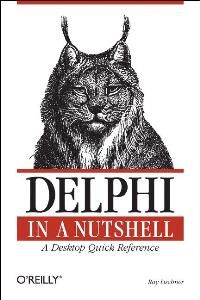
Delphi in a Nutshell. A Desktop Quick Reference. : A Desktop Quick Reference (In a Nutshell (O`Reilly)) von Ray Lischner Delphi is quite rightly reckoned to be one of the best IDEs (Integrated Development Environments), and ideal for rapid program development thanks to its use of VCL. The Nutshell series are information-dense reference titles, and Delphi In A Nutshell doesn`t disappoint. After a fast tour of Delphi`s version of the Pascal language and the files and forms used in the Delphi IDE you get an overview of object oriented programming as it relates to Delphi. There`s coverage of of Delphi usage including scheduling, thread synchronisation and so on, then it`s on to the language itself. Each language element is named, its syntax and a description with any gotchas noted. There`s a tips and tricks section followed by example usage and pointers to related material. This is a lot to pack in for every Delphi language element. One consequence is the need to limit the examples, which is a pity as they`re often the most useful information. At the end of the book the last chapter deals with compiler directives and two appendices cover Delphi`s command line tools and the separate but indispensable SysUtils unit. Delphi In A Nutshell isn`t the kind of book you read in the bath, but it is one every Delphi programmer should have available when out of it. Aimed at the working Delphi developer, Delphi in a Nutshell is an effective desktop reference to this popular programming tool. Besides listing all core classes and methods, this book also provides a host of expert dos and don`ts for mastering the newest features in Delphi`s Object Pascal. The heart of this book is its reference sections on built-in Delphi language features and other useful information on this development tool. Each entry has a guide to syntax, a description of all parameters and return values, and code samples, plus many entries feature tricks and tips with additional information. While this title concentrates on the core language (instead of Delphi`s extensive support for visual components), there`s little doubt that it will be useful if you work with the tool on a daily basis. The book also delivers an advanced guide to ramping up on the latest and greatest in new language features in Object Pascal. Material on using classes, and the type of information features available in today`s Delphi, are particularly effective. There are a lot of smart tips on proper class design techniques, including using properties, constructors, and destructors. (Delphi has its own conventions here, and this book will fill you in if you are coming to Object Pascal from another programming language. ) Along the way, the author offers numerous expert nuggets on when to use (and when to avoid) using certain features. Whether you are a novice or a more experienced developer, this tutorial and reference is all you need to be productive with the latest and greatest in object-oriented programming with Delphi. Topics coveredOverview of Delphi Object Pascal, units and libraries, data and string types, exception handling, file I/O, classes and objects, inheritance, constructors and destructors, interfaces, reference counting, Windows messages, memory management strategies, virtual method tables (VMTs), properties, using TypInfo, virtual and dynamic methods, automated methods and COM, Delphi type information and RTTI, concurrent programming with threads, synchronization, thread local storage techniques, Delphi language reference, system constants, operator reference, compiler directives, code samples, and programming tips.

Delphi in a Nutshell. A Desktop Quick Reference. : A Desktop Quick Reference (In a Nutshell (O`Reil…

4,17 Ødurchschnittliche Bewertung · 24 Bewertungen bei Goodreads

von Ray Lischner Verlag: OREILLY & ASSOC INC O`Reilly Media

2000 2000 Softcover 576 S. 22,7 x 15,1 x 3,2 cm Zustand: gebraucht - sehr gut, IDEs VCL Integrated Development Environments synchronisation programmer SysUtils programming tool Object Pascal I/O Windows messages VMTs virtual method tables TypInfo dy Delphi is quite rightly reckoned to be one of t…

Bestell-Nr.: BN0906
ISBN: 1565926595
Anbieter: BUCHSERVICE / ANTIQUARIAT Lars-Lutzer *** LITERA…, Wahlstedt, Deutschland

Verkäufer akzeptiert PayPal

3,89 EUR

zzgl. 6,99 EUR Verpackung & Versand
SAP Interface Programming: A comprehensive reference for RFC, BAPIs, ActiveX and JCo programming. Techniques: tRFC, qRFC, and parallel processing [Gebundene Ausgabe] tools error diagnosis developers Business Objects Java Connector troubleshooting Johannes Meiners Wilhelm Nüßer With a strong focus on the RFC Library, this book gives beginners a first-hand introduction to basic concepts, and highlights key tools in the ABAP Workbench. Actual programming examples help to illustrate client-server architecture, and show you how to assess the appropriate tools for error diagnosis, troubleshooting and more. Experienced SAP developers can dive right into comprehensive chapters on programming the RFC interface, and advanced techniques such as tRFC, qRFC, and parallel processing. Extensive coverage of BAPIs, ActiveX, JCo and highly-detailed programming examples serve to round out this exceptional resource. Highlights include- ABAP Workbench tools - Developing client/server applications - In-depth guidance on the RFC Library - tRFC, qRFC, and parallel processing - RFC Troubleshooting - Business Objects, BAPIs, and ActiveX - Java Connector (JCo) Synopsis Deals with computers/software. 1-59229-034-5 1592290345 ISBN-13 978-1-59229-034-5 9781592290345 Introduction 1. The Basics of R/3 System Architecture The Application Server The Dialog Process The Update Task The Enqueue Process The Gateway Server Distributed Load Systems and the Message Server The RFC Interface Within the R/3 System 2. The Basics of the ABAP Programming Language The ABAP Development Environment Creating Database Tables The Data Dictionary Relationships Between Domains, Data Elements, and Tables Create a Domain Create a Data Element Create a Transparent Table Maintaining Data Records Using the Data Browser A Simple Program ABAP Data Types and Variable Declaration Elementary Programming Statements in ABAP Value Assignments Branches Loops Access to Internal Tables Access to Database Tables Configuration of Selection Screens Creating Function Modules Coding Conventions in This Book 3. Introduction to Programming with the RFC API The Task for the First Example Programming the SAP Function Modules Programming the Client The Configuration of the main() Function Open a Connection to the R/3 System Calling Up Function Modules in the R/3 System Frequent Errors on the Client Side Overview of the Functions and Structures Used From an RFC Function Call to the Function Module Programming the External Server Configuring the main() Function for an External Server Open a Connection with the R/3 System Implementing the Message Loop Implementing the Server Services Setting Up the Connection to the R/3 System Programming the ABAP Client Frequent Errors on the Server Side Functions Used 4. The Basics of RFC Programming Type Mapping and Data Aggregates Generic Data Types The Character Data Types Numeric Strings The Case of Packed Numbers Final Overview of Type Mapping Working with Structures Working with Internal Tables Creating an Internal Table in an External Program Administration of Data Records in an Internal Table Reading and Writing Data Records in an Internal Table Overview of the Functions for Internal Tables The Message Loop Alternatives for Logging on to an R/3 System Working With a Configuration File Working with Load Balancing Working with the RfcOpen Function 5. Troubleshooting The ABAP Debugger The BREAK Statement The Gateway Monitor The RFC Trace Structure of the Trace File for an External Client Structure of the Trace File for an External Server Traces Using Transaction ST05 The RFC Generator Structure of the Client Program Generated Structure of the Server Program Generated Macros for Setting and Reading Values SAP Test Programs 6. Advanced Techniques Return Calls from the Server Automatic Creation of a Structure Description Transactional Remote Function Calls The R/3 System as tRFC Client Programming a Transactional RFC Server Transactional RFC Client Queue RFCs Administration of qRFCs in the R/3 System Developing a qRFC Client in the R/3 System Developing an External qRFC Client tRFC and qRFC Calls Conclusion Error Messages from an External Server Error Messages from a Synchronous Server Error Messages from the tRFC and qRFC Servers Parallel Processing Multitasking and Multithreading Creating and Exiting Threads The Basics of Synchronization Synchronization Objects Advantages of Parallel Processing in RFC Programming Implementing Parallel Processing in External Servers 7. The Business Object Business Object Close to the Object Structure of the Business Object The Structure of the Business Object Builder Creating the Object Key Methods of the Business Object Instance-Dependent Methods Implementation of Methods Using ABAP Program Forms Creating a Method Object Release and the Business Object Repository Guidelines for Developing API Methods Possibilities for Activation 8. Calling BAPIs from Clients What Are COM and ActiveX? What Is Your Name? or an Introduction to the Use of ActiveX Controls The SAP BAPI Control Opening a Connection with the R/3 System Calling the Business Object Method What Is a BAPI Proxy Object Anyway? Naming Conventions During Programming Wrapping the BAPI Proxy Object A Better Method for Setting Up a Connection to the R/3 System Integrating the Logon Control into the Client Events of the SAPLogonControl Class Recognizing a Disconnection Concepts for Creating Data Aggregates The SAP TableFactory Control in Detail Administering Structures with the SAP TableFactory Control Accessing Data in Structures Note When Working with Structures! Working with Tables The Class Hierarchy for Working with Tables Important Attributes of the Table Class Structure of the Example Programs Reading Data Records in a Table Changing Data Records Alternatives for Creating the Field Description Visualization of the Table Contents Hierarchy of the Classes of the TableView Control Specifying the Layout of the Data Grid Accessing the Cells in a Data Grid Specifying the Data Source for the Data Grid Concepts for Inserting and Deleting Rows and Columns Working with the Clipboard 9. SAP and Java The SAP Java Connector Basics of the JCo Ways of Using the JCo The JCo Package JCo Releases Using the JCo Basic Structure of a JCo Application Connection Setup Running the RFC Modules Access to Data and Tables Complete Example Program Troubleshooting and Tracing Closing Remarks The Future of the SAP Java Interface Appendix A. Sources and Further Reading Appendix B. About the Authors Index SAP Interface ProgrammingA comprehensive reference for RFC, BAPIs, ActiveX and JCo programming. TechniquestRFC, qRFC, and parallel processing Johannes Meiners Wilhelm NüßerBeispielbild für diese ISBN

SAP Interface Programming: A comprehensive reference for RFC, BAPIs, ActiveX and JCo programming. T…

von Johannes Meiners Wilhelm Nüßer Verlag: Galileo Press GmbH

Auflage: 1 (September 2004) Auflage: 1 (September 2004) Hardcover 360 S. 24,4 x 17,6 x 2,4 cm Zustand: gebraucht - sehr gut, With a strong focus on the RFC Library, this book gives beginners a first-hand introduction to basic concepts, and highlights key tools in the ABAP Workbench. Actual progra…

Bestell-Nr.: BN2064
ISBN: 1592290345
Anbieter: BUCHSERVICE / ANTIQUARIAT Lars-Lutzer *** LITERA…, Wahlstedt, Deutschland

Verkäufer akzeptiert PayPal

49,00 EUR

zzgl. 6,99 EUR Verpackung & Versand
Die 120 besten Checklisten zur Personalentwicklung Checklisten und Handbücher Planung, Durchführung und Controlling – Mitarbeiterförderung und -qualifizierung – Potenzialermittlung und Führungskräfteentwicklung [Gebundene Ausgabe] Ehrhard Flato (Autor), Silke Reinbold-Scheible Beruf Mitarbeitermotivation Nachfolgeplanung Nachwuchsförderung Personalentwicklung Qualifizierungsprogramm Betriebswirtschaft Unternehmen Finanzen Recht Wirtschaft Politik Gesellschaft Modernes Modernes Multimediapaket zur Förderung und Schulung der Belegschaft. Wer Personal führt, braucht täglich einen Plan. Die Profi-Toolbox liefert eine Fülle an Strategien, von denen Angestellte und Unternehmer gleichermaßen profitieren - ob es sich um den Aufbau von Nachwuchskräften handelt, die Qualifizierung »alter Hasen« oder die Neubesetzung freier Stellen. Ziele? Methoden? Erfolgskontrolle? Mit diesem Know-how-Paket kann man planen, gestalten und evaluieren. Es hilft, Visionen zu realisieren und Entscheidungen zu treffen. Mit Checklisten zum Selbstausfüllen auf CD-ROM. Autor: Ehrhard Flato ist Trainer und Organisationsberater. Der Betriebswirt hatte diverse leitende Aufgaben im Personal- und Bildungswesen der Kali und Salz AG Kassel inne. Silke Reinbold-Scheible ist Trainerin und Coach in der Persönlichkeitsentwicklung. Die Psychologin arbeitete im Personalbereich der DaimlerChrysler AG und lehrte an der FH Karlsruhe. Beruf Finanzen Recht Wirtschaft Politik Gesellschaft Betriebswirtschaft, Unternehmen Mitarbeitermotivation Nachfolgeplanung Nachwuchsförderung Personalentwicklung Qualifizierungsprogramm

Die 120 besten Checklisten zur Personalentwicklung Checklisten und Handbücher Planung, Durchführung…

von Ehrhard Flato Verlag: mi-Fachverlag

2007 2007 Hardcover 224 S. 26,4 x 18,6 x 2,4 cm Zustand: gebraucht - sehr gut, Multimediapaket zur Förderung und Schulung der Belegschaft. Wer Personal führt, braucht täglich einen Plan. Die Profi-Toolbox liefert eine Fülle an Strategien, von denen Angestellte und Unternehmer gleichermaßen profit…

Gebraucht, sehr gut
Bestell-Nr.: BN13675
ISBN: 3636030906
Anbieter: BUCHSERVICE / ANTIQUARIAT Lars-Lutzer *** LITERA…, Wahlstedt, Deutschland

Verkäufer akzeptiert PayPal

48,90 EUR

zzgl. 6,99 EUR Verpackung & Versand